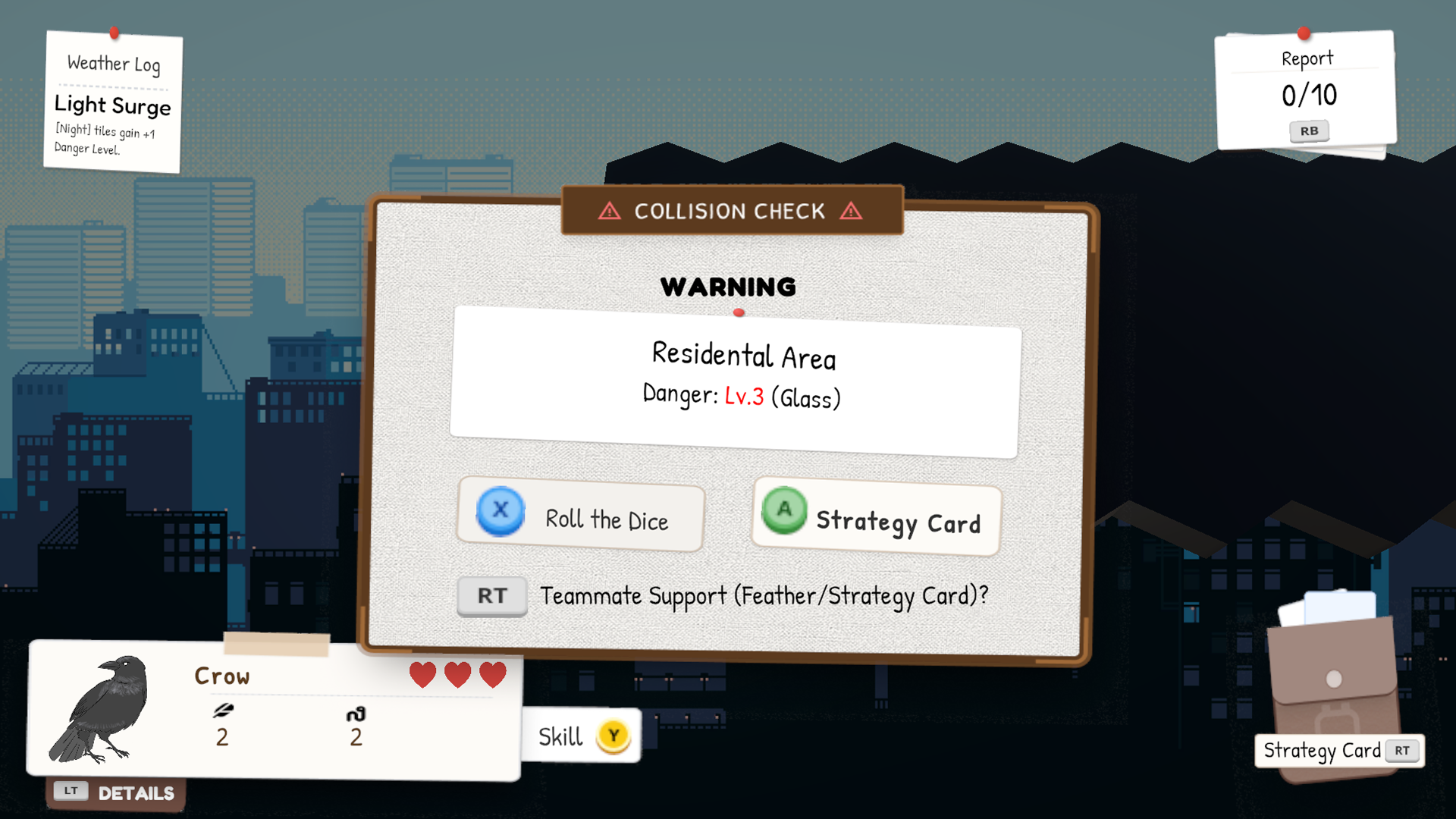
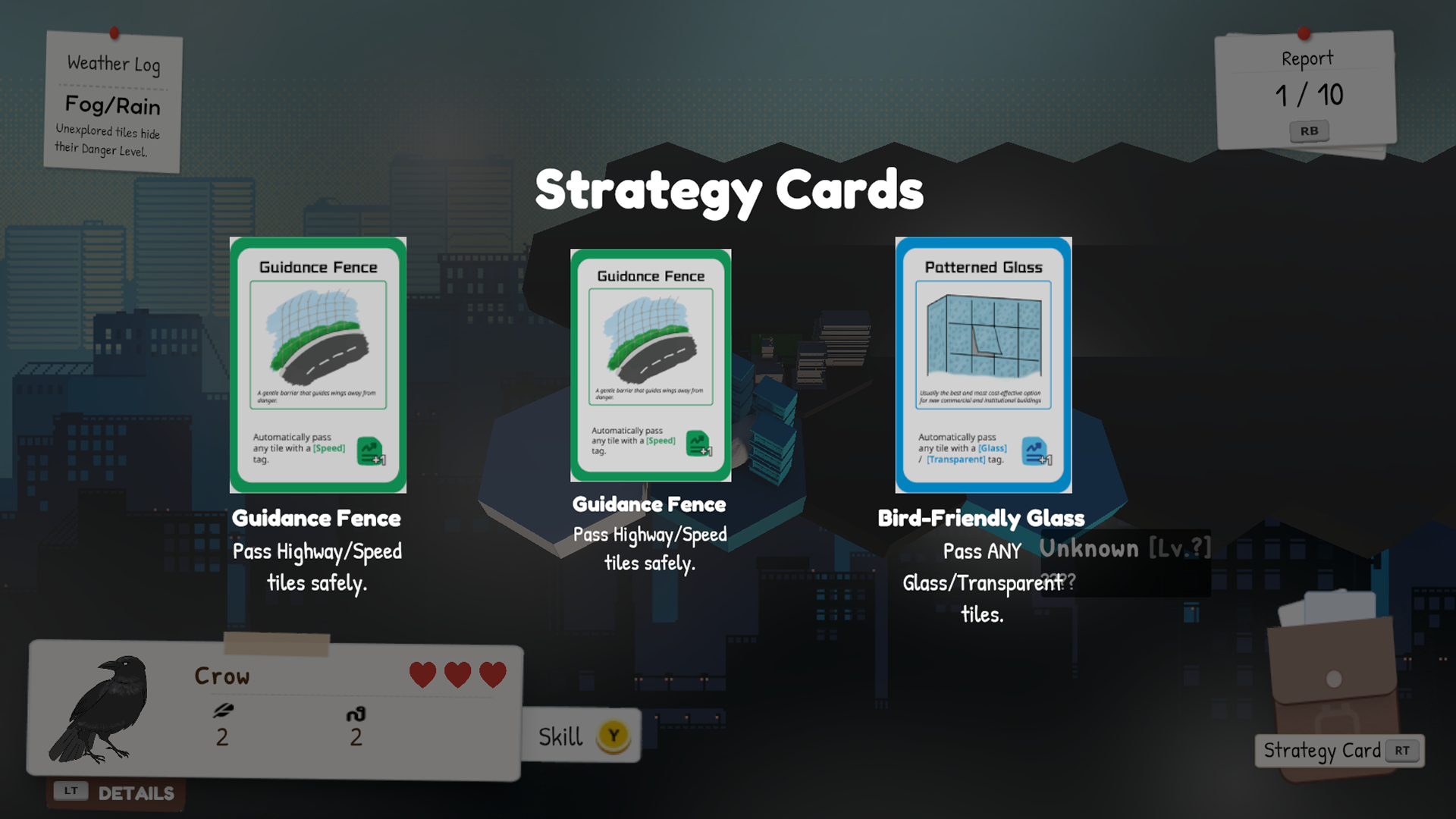
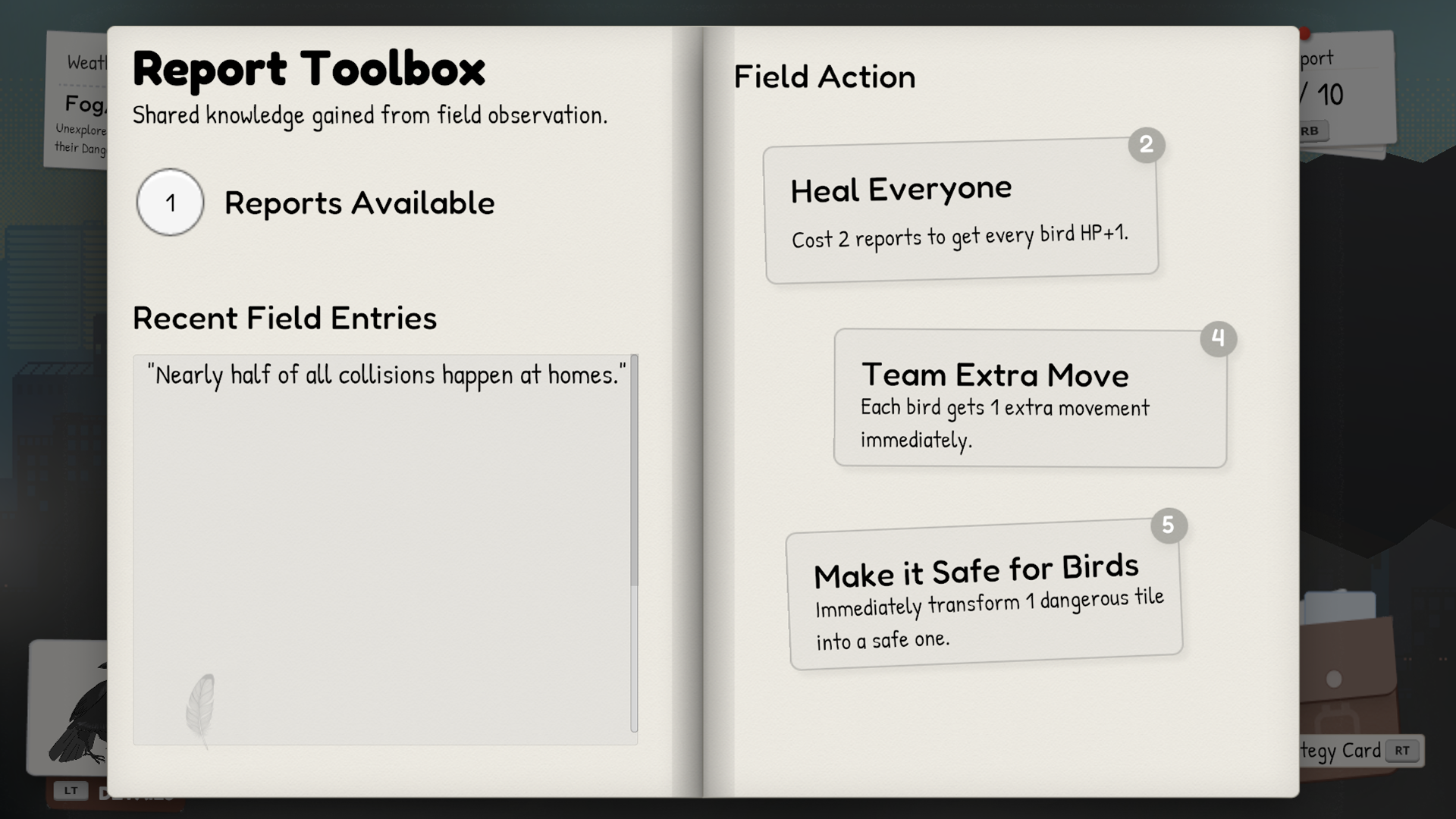
A digital, shared-screen tabletop game for up to four players, designed as an interactive ecological communication tool. Players cooperate as migrating birds navigating a city of glass, weather and hidden dangers — learning about bird-window collisions not through text, but through what the game asks them to do: applying mitigation strategies, observing outcomes, collecting reports.
The design is grounded in three frameworks from interactive-learning research — stealth learning, procedural rhetoric and peer-to-peer cooperation. A comparative study against an educational video showed substantially stronger engagement and meaningfully higher real-world action intent, supporting the hypothesis that an argument made through rules can be more effective than the same argument stated as text.
Video
Reflection
Urban Feather is the project where my vision came into clearest focus. I have always believed that the goal of design is not just to remove friction, but to create experiences that are inherently rewarding — driven by mastery, autonomy and connection rather than points and badges layered on top. This project let me test that belief directly: instead of rewarding players with scores for "learning correctly," I built a game where understanding emerges from cooperation, meaningful choices, and the satisfaction of seeing a strategy work. The comparative study became my way of asking whether that conviction actually holds — and the result, that players became more willing to act in the real world, told me it does.
It also confirmed the kind of designer I want to be: one who can carry an idea all the way from research and behavioral theory to a fully built, playable system, rather than stopping at a concept. Working alone in Unity across two quartiles was demanding, but it taught me that I am most engaged when I am both designing the experience and shaping how it actually works. Going forward, I want to keep designing technology that meets people where they are and turns care into action — whether the medium is a game, an AI tool, or something I haven't tried yet.